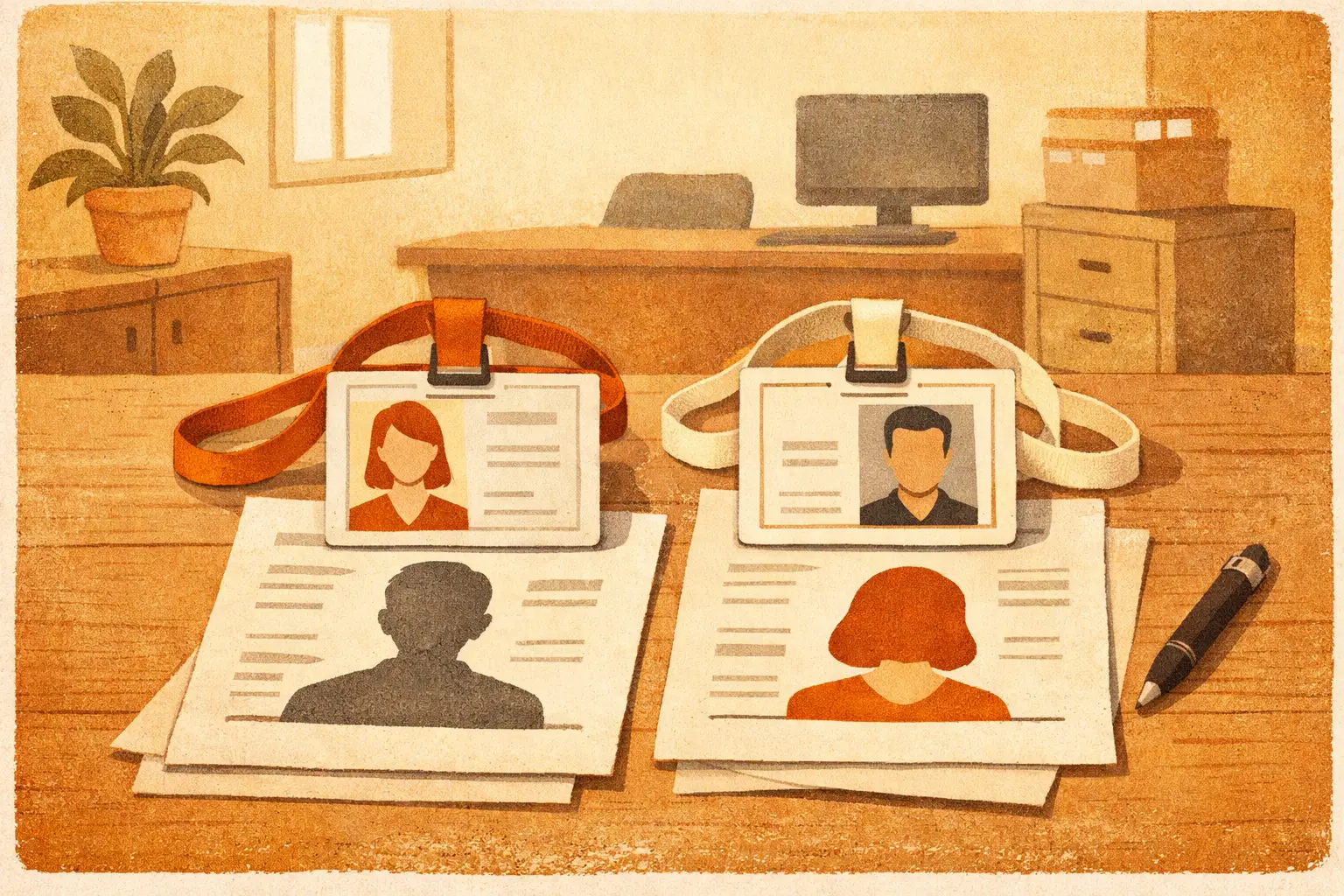
A good fake identity rarely falls apart all at once. It slips at the edges. The phone number belongs to someone else. The email has no history tied to the name. The address on an ID does not line up with the place they say they just left.
That is how to spot identity mismatches: do not look for one dramatic red flag. Look for small facts that refuse to match. If a stranger wants access to a jobsite, wants to buy expensive equipment, or wants you to send a deposit, those small facts are worth a closer look.
Start with the details they gave you
Most people who are being honest can give the same basic details more than once without changing the story. You do not need to interrogate them. You just need to slow down before something valuable changes hands.
Write down the full name, phone number, email, and current address exactly as given. If they show you an ID, compare the spelling, middle initial, date of birth if shared, and address to what they told you earlier. A person may use a nickname, have a new phone number, or have moved last month. None of that proves fraud.
But a pattern matters. Maybe the ID says Robert J. Hill, the email account uses Anthony Hill, and the phone is connected to an unrelated name. That does not settle the matter by itself. It does tell you not to hand over keys, cash, a company truck, or customer access until you understand why.
A real mismatch is often about more than a typo. It is a conflict between facts that should normally point to the same person.
The story should stay steady
Listen for changes in the simple parts of a story. A contractor who says he has worked in Denver for three years but gives an address trail that never touches Colorado may have a simple explanation. He may have traveled for work. He may have used a family member’s address. Ask, then check what can be checked.
The concern rises when every answer creates a new version of the story. The person says their phone is new, their email is old, their ID address is temporary, and the bank account is in a cousin’s name. Any one of those can happen. Four of them at once deserve a pause.
Here are the kinds of conflicts that usually call for a closer look:
- A phone number or email tied to a different name than the one provided.
- Address history that does not fit the person’s claimed location or timeline.
- A name with different spellings, ages, or middle initials across records.
- An ID that appears altered, expired, or inconsistent with the details they gave you.
- A public web or social presence that points to a different person using the same contact details.
Do not treat a lack of social media as proof of anything. Plenty of honest people keep a low profile. The useful signal is a direct conflict, such as a phone number used publicly by another person with a different name.
How to spot identity mismatches without guessing
There is a big difference between checking a fact and making an assumption. A last name change can be normal. A shared family phone plan can be normal. Even an old address can hang around in public records long after someone moves.
The better question is: can the person give a plain, believable reason that matches the rest of the information? If they say the phone is on their spouse’s account, does the shared address support that? If an old name appears, is there a reasonable link to the current name? You are checking consistency, not trying to build a case against somebody.
Use the details you already have. A name and phone number can show whether the basic identity trail is coherent. Adding an email can help too. When the same name, contact details, and address history keep lining up, there is less guesswork. When they point in different directions, wait.
For a fast, single-use check, TellData can pull those pieces into one plain-English report. Its $29.99 report uses the information you enter to run six checks, including identity and SSN trace data, address history, phone and email consistency, public records, watchlists, and public web presence. The point is not to label a person based on one record. It is to see whether the facts fit together before a stranger gets access to something that matters.
Public information has limits. Records can be late, incomplete, mixed with another person who has a similar name, or simply wrong. A report cannot verify every statement someone makes, and it cannot tell you what a person will do next week. It can show where the story does not line up, which is often the part you need to see.
A borrowed identity leaves odd marks
Someone using a borrowed or made-up identity often knows the headline details but struggles with the boring stuff. They may know a name, an address, and a date of birth. They may not know which phone number is tied to that identity, how long the person lived at an address, or why their email points somewhere else.
A property manager might meet a person who wants a lockbox code for a vacant unit. The person provides an ID and says they are buying on behalf of a family member. Before sharing access, the manager checks the name, phone, and email. The phone traces to a different name, the email is connected to a separate address history, and the person cannot explain either one. That is not a time for a debate. It is a time to stop the handoff and verify more.
The same applies to a private sale. If someone is sending a driver to collect a $7,500 piece of equipment, confirm that the name on the payment, the contact number, and the person arriving are not three unrelated identities. Fraud often depends on you being rushed, polite, or distracted.
And sometimes the mismatch has an innocent reason. A family business may use one shared number. A person may be coming out of a divorce and still have old records under a prior name. That is why you should avoid accusations. Say you need to confirm the details before moving forward. Then give yourself room to do it.
Do not let urgency do the deciding
The strongest pressure line is usually some version of, “I need this handled right now.” Maybe they need the keys before lunch. Maybe another buyer is waiting. Maybe their phone is about to die and they cannot send more documents.
Urgency is not proof of fraud. But it is a common way to get you past your own checks. When a request involves money, access, inventory, tools, company vehicles, or customer property, a short delay is cheaper than a bad handoff.
Set a simple rule before the next situation comes up: if the identity details conflict, no transfer happens until the conflict is cleared up. That rule protects your staff too. A new office assistant should not have to make a judgment call while someone is standing at the counter pushing for an answer.
You can also separate identity confirmation from the business deal itself. Confirm who you are dealing with first. Then decide how, or whether, you want to proceed with the transaction based on your own policies and the full situation. Those are different steps, and mixing them creates mistakes.
When a mismatch appears
Keep the response calm and boring. Do not announce that someone is a criminal. Do not try to force a confession. Tell them the contact details do not match what you have and you need additional confirmation before releasing money, access, or property.
Ask for a clear explanation and an alternate way to verify the detail. If the explanation makes sense and the facts begin to line up, fine. If the answers shift again, stop the handoff. Save the messages, note the names and numbers used, and keep your team from continuing the deal through a new account or phone number.
The goal is not to catch people out. It is to stop guessing. A clean identity trail will not answer every question, but it gives you a firmer place to stand before you trust a stranger with something you cannot easily get back.