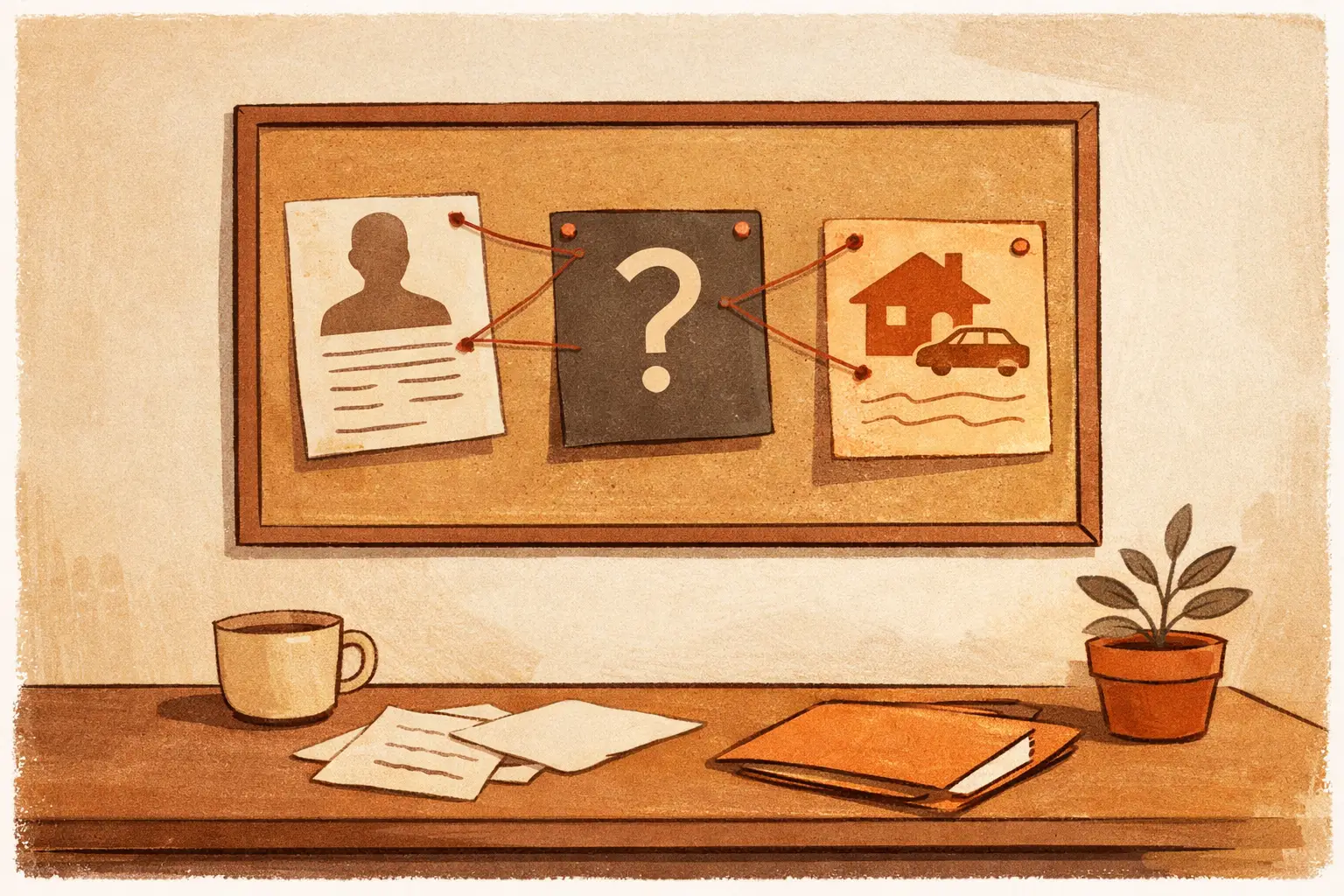
Most bad deals do not start with a person who looks obviously shady. They start with a normal text, a decent story, and one detail that feels a little off.
A guy says he needs to borrow a tile cutter for a weekend job in Mesa. He gives you a name, a phone number, and a photo of an ID. The number is new. The address he gives is vague. You may still decide to meet him. But before your tools, keys, cash, or customer access changes hands, a people search report gives you something better than a gut feeling: a way to see whether the basic facts tell the same story.
That matters because a borrowed identity can look convincing for the first five minutes. A real name on a fake email is still a problem. So is a phone number that does not appear to connect with the person standing in front of you.
The part people skip when they are busy
Small business owners are used to moving fast. A plumber gets an after-hours call. A cleaning company needs a new crew member to pick up a key from the office. A property manager is dealing with someone who says they represent an owner. A private seller has a buyer ready to send a deposit.
The pressure is always the same: handle it now, ask questions later.
Later is where the trouble shows up. A tool is gone. A payment is reversed. A person has access to a vacant unit, a warehouse, or a customer’s home under a name that was not really theirs. The loss may be $300. It may be a whole weekend of work. Either way, you are the one left chasing it.
A quick check will not predict whether someone will be honest. It cannot read intent, verify every claim, or replace good judgment. It can show you when the details you were given do not line up. That is often enough to slow down a deal that is moving too fast.
A people search report is a consistency check
Think of the report as a way to test a simple claim: does this person appear to be who they say they are?
You start with details you already have, usually a name and phone number or email. State and SSN information, when available and appropriate to provide, can help sharpen the identity match. The goal is not to build a file on somebody for curiosity. The goal is to catch obvious mismatches before you take on risk.
TellData puts six checks into one plain-English PDF report. It can bring together identity and SSN trace data, address history, court and criminal records, watchlist and sanctions screening, phone and email consistency checks, and public social and web presence.
That is useful because these details rarely sit in one place when you search by hand. You can spend an hour opening tabs, typing names into different sites, and still come away with a pile of loose facts. A report gives you one view and a direct result: Clear, Review, or Flag.
Clear does not mean a person is guaranteed safe. It means the information checked did not show a major conflict that needs your attention. Review means stop and look closer. Flag means there is a meaningful issue or mismatch worth addressing before you move forward with the transaction or access you were considering.
The red flags are often small at first
One mismatch may have an innocent reason. People move. They change phone numbers. They use an old email for certain accounts. A record can also be incomplete or attached to another person with a similar name.
But two or three mismatches deserve a pause.
Say a person wants to buy a used pressure washer from your shop for $1,800. Their name seems to match, but the phone has no clear connection to it. The email uses a different last name. The address history points to places they never mentioned. None of that proves fraud. It does mean you should not hand over the machine based on a screenshot of a payment confirmation.
Or picture a subcontractor who says he is picking up equipment for a contractor you know. The name and email he gives you do not match the contact your contractor normally uses. A quick report may not settle the whole matter. But it can give you a solid reason to call the contractor directly before opening the gate.
The best use of a flag is simple: verify through another channel. Call the number you already have on file. Ask the person to use an established business email. Meet at your shop instead of sending an employee to an unfamiliar address. Wait until funds have really cleared. Those are basic steps, but they are easy to skip when somebody is in a hurry.
Do not confuse public records with a verdict
This part matters. Public information can help you spot a mismatch, but it is not a final judgment on a person.
Names can be shared. Addresses can be old. Court records may not show the outcome of a case in the way you expect. A watchlist result can require careful review to make sure it refers to the right person. And a clean-looking report does not mean there is no risk. It only means the available checks did not surface a concern in that moment.
Treat the report like a flashlight, not a crystal ball.
If something looks wrong, do not make assumptions or accuse someone based on a single line. Ask for clarification. Confirm details independently. A legitimate person may have a simple explanation. A person using a fake identity may get vague, pushy, or suddenly disappear. That reaction can tell you plenty.
When $29.99 makes sense
Manual searching can look free until you count your own time. If you spend 45 minutes trying to piece together a name, phone, address, and record history, that is time you are not quoting work, serving customers, or getting home.
A single TellData report is $29.99, with no subscription or contract required. The stated turnaround is about two minutes. For a one-off situation involving a set of keys, a piece of equipment, a large private sale, or a stranger asking for access, that is a small cost compared with getting it wrong.
It will not make every decision for you. It should not. The real value is that it turns a vague feeling into facts you can check. You may find that the person’s details line up and continue with normal care. Or you may find enough friction to change the handoff, request more proof, or walk away.
Use the report before the pressure starts
The worst time to verify somebody is after they are already at your door with a truck idling outside. Run the check when the deal first becomes real, before you promise access or agree to a handoff.
Keep the process plain. Enter the details you have. Let the six checks run. Read the verdict, then look at the facts behind it. If the report says Review or Flag, slow the situation down and confirm the details another way. Don’t let a convincing story rush you past the part where you check it.
There will always be cases where the report does not give a clean answer. That is normal. A report is there to reduce guessing, not pretend that people are simple. When money, property, keys, or your reputation are on the line, a two-minute pause can be the smartest part of the deal.